Bonus Labyrinth Navigation: Decoding Contribution Rates Across Casino Games
Written by Casey Albrecht · Mar 26, 2026
Bonus Labyrinth Navigation: Decoding Contribution Rates Across Casino Games
Unraveling the Basics of Bonus Contribution Rates
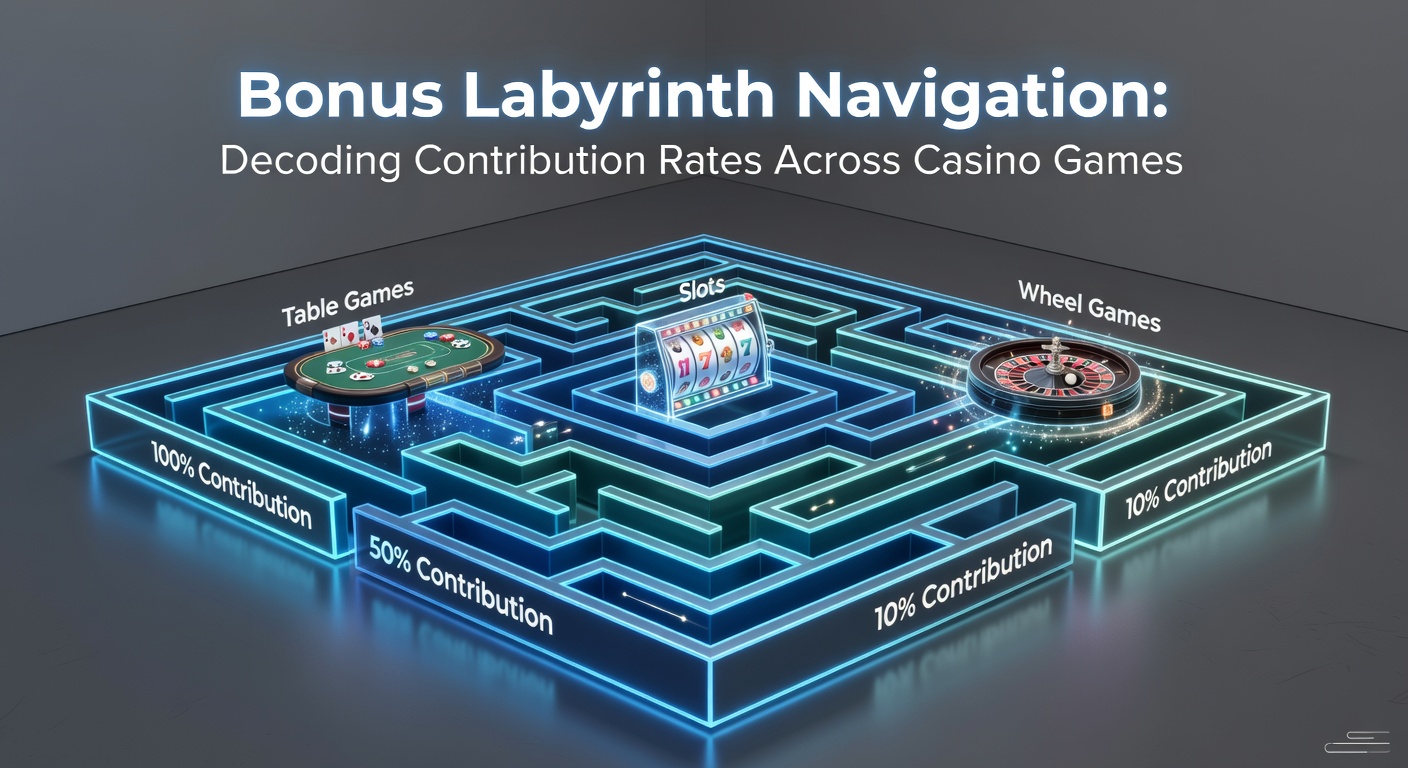
Bonus offers in casinos come with wagering requirements that players must meet before withdrawing winnings, and contribution rates determine how much each game wager counts toward clearing those requirements; slots typically contribute 100%, so every dollar bet moves the needle fully, while table games like blackjack often hover around 10-20%, meaning ten dollars wagered there equals just one dollar's progress on a slot. Data from industry reports shows these rates vary widely across operators and jurisdictions, creating what experts call a "bonus labyrinth" where strategic game selection becomes key to efficient navigation. Turns out, understanding these percentages unlocks faster paths through the wagering maze, especially since low-contribution games can drag out playtime significantly.
Researchers who've analyzed thousands of bonus terms note that contribution rates stem from house edges; games with higher volatility or edges, like slots, get full credit because they generate more revenue for the house, whereas skill-influenced games such as blackjack receive reduced rates to balance risk. According to figures from the New Jersey Division of Gaming Enforcement, which oversees a major online market, average slot contributions held steady at 100% across licensed sites in 2025, but table game rates dipped as low as 5% for certain blackjack variants during promotional periods. And here's where it gets interesting: progressive jackpot slots sometimes drop to 50% due to their massive payout potential, forcing players to weigh big-win dreams against bonus-clearing speed.
Slot Machines: The High-Contribution Powerhouses
Slots dominate bonus clearing because they almost always contribute 100%, allowing players to churn through requirements quickly with minimal strategic input; classic three-reel games, video slots, and even megaways titles fall into this category, so a $1,000 wagering target clears after exactly $1,000 bet on qualifying machines. But not all slots play fair in this game—observers point out that branded titles or those tied to networks like NetEnt's portfolio might cap at 90-95%, a nuance buried in fine print that catches many off guard. Studies from gaming analytics firms reveal that over 80% of bonuses worldwide prioritize slots for this reason, turning them into the go-to for labyrinth runners aiming to exit fast.
- Classic slots: 100% contribution standard across most platforms.
- Video slots with bonus rounds: Often 100%, though scatter pays occasionally reduced.
- Progressive slots: 50-75%, reflecting jackpot risks; one case saw a Nevada operator drop it to 25% post a record payout.
People who've mapped bonus terms extensively discover that mobile-optimized slots contribute identically to desktop versions, ensuring seamless play across devices while chasing those requirements.
Table Games: The Low-Percentage Hurdles

Blackjack tables present a classic low-contribution challenge at 10-20% typically, since card counting and basic strategy shrink the house edge to under 1%, so operators limit progress to protect margins; European blackjack might hit 15%, while multi-hand variants drop to 10%, and side bets like Perfect Pairs often exclude entirely. Roulette wheels fare similarly, with French and European versions at 10-25% because of low-edge even-money bets, although American double-zero wheels sometimes climb to 30% due to higher house advantage—data indicates this spread encourages European rule preferences in bonus play. Baccarat, another staple, contributes 10-15%, favoring banker bets that hover near even money, yet tie bets universally void contributions to curb outlier wins.
Craps adds layers of complexity, where pass line bets contribute 20-30%, but proposition bets get zero credit since their high house edges paradoxically don't justify full bonus utility; experts who've dissected operator policies observe that live dealer craps mirrors RNG versions but enforces stricter exclusions during peak hours. What's significant here is how these rates force longer sessions, turning what seems like a quick bonus hunt into a marathon grind.
Video Poker and Other Hybrids: The Middle Ground
Video poker strikes a balance with 20-30% contributions on average, rewarding skill in games like Jacks or Better where optimal play yields over 99% RTP; full-pay Deuces Wild might edge up to 40% at select sites, but short-pay machines languish at 10%, so variant selection matters hugely in the labyrinth. Poker variants beyond video, such as Caribbean Stud, contribute 15-25%, with ante bets counting fully while raises scale down, creating incremental progress that savvy players exploit through tight play.
And then there's keno and scratch cards, which punch above their weight at 20-50%; keno's high volatility mirrors slots somewhat, explaining the bump, while instant-win scratches hit 50-75% in markets like Ontario, per regulatory filings. Turns out, hybrids like Slingo—blending bingo and slots—often land at 80-100%, bridging gaps for diversified bonus strategies.
Regional Variations and Emerging Trends
Contribution rates shift by jurisdiction, with U.S. states like New Jersey mandating clear disclosures that keep slot rates at 100% but cap blackjack at 20% max, whereas Ontario's market, overseen by the Alcohol and Gaming Commission of Ontario, allows operators more flexibility—data shows roulette contributions there averaging 15%, lower than Michigan's 25%. In Europe, Malta-licensed sites standardize table games at 10%, but Swedish regulations push video poker higher to 35%, reflecting local player preferences for skill games.
Australia's framework, detailed in reports from state regulators, excludes table games entirely from many bonuses, funneling action to slots at full value; this pattern holds in Asia too, where pachinko hybrids contribute 50-80%. Now, looking ahead, March 2026 brings updates from bodies like Ontario's AGCO, standardizing hybrid game rates amid rising live dealer popularity, which currently averages 10-20% globally since streaming costs inflate house protections. Observers note these tweaks aim to simplify the labyrinth, yet core disparities persist because revenue math doesn't bend easily.
| Game | North America | Europe | Australia/Asia |
|---|---|---|---|
| Slots | 100% | 100% | 100% |
| Blackjack | 10-20% | 10% | 0-10% |
| Roulette | 15-30% | 10-25% | 10% |
| Video Poker | 20-30% | 25-35% | 20% |
Live Dealer and Specialty Games: Modern Twists
Live dealer blackjack and roulette mirror RNG rates at 10-20%, but infinite blackjack variants sometimes boost to 25% thanks to side bet exclusions; baccarat live streams hold steady at 10%, popular in high-roller bonuses where volume clears requirements despite the drag. Specialty games like sic bo contribute 20-40%, reflecting dice volatility, while dream catcher wheels—pure chance—hit 15-25%, blending entertainment with slow progress.
One study highlighted a case where a Pennsylvania operator raised live game contributions to 30% during a 2025 promo, slashing average clear times by 40% for participants who stuck to high-RTP tables, proving operators tweak rates to boost engagement. Yet, exclusions abound for games like bingo (5-10%) or virtual sports (0-20%), padding the labyrinth with dead ends for the unprepared.
Conclusion
Navigating bonus labyrinths hinges on decoding contribution rates, where slots lead at 100% and table games trail far behind at 10-30%, shaped by house edges adn regional rules that vary from New Jersey's transparency to Ontario's flexibilities; as March 2026 approaches with regulatory harmonization, these patterns solidify, offering clearer maps for players parsing terms across games. Data consistently shows informed selection—prioritizing high-contributors like slots or video poker—accelerates progress, while low-rate pitfalls extend the journey, underscoring why experts emphasize term scrutiny in every bonus pursuit. The reality remains straightforward: master the rates, and the labyrinth loses its menace.